Answer Engine Optimization Techniques: Winning Featured Snippets & Zero-Click Searches
Introduction: AEO as the Evolution of SEO
Search Engine Optimization (SEO) has been the mainstay of search engine optimization for many years. To improve their Google ranks, businesses optimized the website’s structure, backlinks, and keywords. However, search guidelines have evolved.
Today, more than half of Google queries end without a single click — because the answer appears directly in featured snippets, knowledge panels, or AI Overviews. This phenomenon, known as zero-click search, demands a new approach: Answer Engine Optimization (AEO).
Key takeaway:
AEO techniques ensure your content is directly cited in answer boxes, featured snippets, and AI-driven summaries — securing brand visibility even when users don’t click through.
What Is Answer Engine Optimization (AEO)?
Answer Engine Optimization is the practice of structuring content so that search engines, AI assistants, and LLM-powered overviews can easily extract, summarize, and present it as the most accurate and relevant answer.
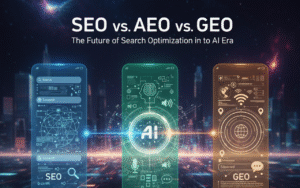
- Traditional SEO: Compete for organic rankings and clicks.
- AEO: Compete for position zero, featured snippets, and AI answer boxes.
Instead of focusing solely on ranking #1, AEO focuses on being the answer.
Why Zero-Click Searches Are Growing
Zero-click searches are increasing because of:
- Featured snippets & direct answers (Google, Bing).
- Knowledge panels & carousels.
- AI Overviews (Google) and AI Copilot cards (Bing).
- Voice assistants (Siri, Alexa, Google Assistant).
Industry studies suggest that more than 60% of searches end without a click because the answer is already on the results page. While this may reduce direct traffic, it increases the value of brand mentions inside answer engines.
Core Answer Engine Optimization Techniques
Featured Snippet Optimization
Featured snippets often come in these formats:
- Paragraphs (definitions, explanations).
- Lists (steps, ranked points).
- Tables (comparisons, data).
Best practices:
- Place concise definitions in the first 2–3 sentences.
- Use bullet points and numbered lists for “how-to” and “steps” queries.
- Add a summary box (“In short” or “Key takeaway”) at the end of major sections.
Question-Based Content
AI assistants and search engines prefer Q&A structures. To capture this:
- Use H2 and H3 headings as questions (e.g., “What is AEO?”).
- Include an FAQ section with schema markup.
- Write in natural, conversational queries that mirror voice search.
Entity-Based Writing
Modern search is entity-first. Google’s knowledge graph and AI assistants work by mapping entities and their relationships.
- Mention people, places, brands, and statistics clearly and accurately.
- Use consistent terminology and synonyms.
- Link to authoritative external sources to strengthen entity context.
Schema Markup for Extractability
Structured data signals machine readability. For AEO:
- FAQ schema: Makes FAQs eligible for instant answers.
- HowTo schema: Helps step-by-step guides appear in snippets.
- Speakable schema: Supports voice assistants like Google Assistant.
Content Design for Scannability
AI and humans both prefer content that’s easy to parse.
- Use the short paragraphs (2–3 sentences).
- Break down long answers with bullet points.
- Highlight key facts in bold.
- Add summary boxes at the end of sections.
Voice Search & Conversational Alignment
Over 30% of all searches are now conducted via voice. To optimize for voice:
- Write in natural language (e.g., “How do I optimize for snippets?”).
- Use long-tail conversational keywords.
- Provide direct answers under 30 words for common queries.
AEO Best Practices Checklist
Here’s a quick rundown of what works best in 2025:
- Answer first, explain later. Give the solution in one sentence, then elaborate.
- Refresh content regularly with updated statistics, images, and references to ensure accuracy and the relevance.
- Use authoritative citations. Outbound links to government, research, and top media sites boost trust.
- Balance depth with extractability. Create long-form articles but embed short, snippet-ready summaries inside.
- Optimize across formats. Text, tables, lists, and charts increase snippet potential.
Tools to Track AEO Performance
Unlike traditional SEO, measuring AEO requires tracking visibility in search engine results and AI-generated results. Useful approaches:
- Manual monitoring: Search for your target keywords and note whether you appear in the search engine snippets.
- SEO tools, such as Semrush, Ahrefs, and RankRanger, include snippet tracking.
- AI search tools: Monitor presence in Google AI Overviews, Bing Copilot, Perplexity AI, and ChatGPT plugins.
- Brand mention trackers: Capture references in AI-generated answers.
Pitfalls & Mistakes to Avoid
- Overloading with FAQs: Too many low-value Q&As dilute authority.
- Ignoring schema markup: Without structured data, search engines may skip your content.
- Thin content: Short definitions without depth won’t sustain authority.
- Neglecting updates: Stale or outdated content reduces the chances of being surfaced in snippets.
Implementation Checklist
- Write direct answers under each H2.
- Add FAQ schema with 3–5 relevant questions.
- Use lists and tables where appropriate.
- Refresh old content with new data.
- Check snippet rankings monthly.
FAQ Section
What is Answer Engine Optimization?
Answer Engine Optimization (AEO) is the process of making content machine-readable and answer-ready so it can appear in featured snippets, AI overviews, and voice assistant responses.
How do I rank for featured snippets?
To rank, structure your content with concise answers, use lists and tables, and apply schema markup to enhance the relevance of your content. Place the main answer early in the text.
Is AEO replacing SEO?
No. AEO complements SEO. Traditional rankings still matter, but AEO ensures your brand remains visible in zero-click and AI-driven searches.
How do I measure zero-click visibility?
Track appearances in snippets, knowledge panels, and AI overviews using SEO tools, brand monitoring, and manual checks of target queries.
Conclusion
The rise of zero-click searches doesn’t mean the end of SEO — it signals the start of Answer Engine Optimization. By focusing on featured snippets, schema, conversational content, and structured entities, your brand can remain visible, trusted, and cited in AI-driven results.
Action step: Start applying AEO techniques now to future-proof your traffic, credibility, and visibility in the age of generative search.



Post Comment