AI Learning-Based SEO Optimization: Search’s Future in 2025
AI-driven learning-based search engine optimization (SEO) is changing at a never-before-seen pace. A decade ago, on-page optimization, link building modifications, and keyword optimization were the primary focuses of SEO. Today, the rise of Artificial Intelligence (AI), particularly Large Language Models (LLMs) such as ChatGPT, Gemini, Claude, and LLaMA, has completely transformed the game.

The Evolution of SEO in the Age of AI
Search engines are no longer just crawling keywords; they’re interpreting context, user intent, and conversation patterns to deliver smarter, human-like answers. At the same time, businesses are leveraging AI tools to generate, optimize, and scale content in ways that were unimaginable just a few years ago.
According to HubSpot (2024), over 61% of marketers are already using AI to assist with SEO tasks such as content writing, meta descriptions, and keyword clustering—and that number is expected to rise sharply.
If you want to rank higher on Google, Bing, and AI-driven search engines, mastering AI SEO with LLMs is no longer optional—it’s essential for growth.
What is AI SEO with LLMs?
AI SEO Optimization with LLMs is the process of utilizing large language models and advanced AI-driven tools to enhance a website’s ranking in search engine results. AI SEO places a greater emphasis on semantic relevance—understanding meaning rather than just literal words—than traditional SEO, resulting in a greater importance placed on keyword density and backlinks.
Predicting what the searcher truly wants to know is recognized as a match of user intent.
Automated optimization (AI regulating internal linking, content scoring, meta tags, and content structuring)
Real-time adaptability (AI tools monitoring SERPs and suggesting quick updates instantly).
In short, LLMs act as copilots for SEO, helping businesses not only write better content but also target the correct queries, adjust strategies dynamically, and keep up with the fast-paced evolution of search engines.
Why LLMs are Changing SEO in 2025
Contextual Search Understanding
Gone are the days when Google ranked you just for stuffing “best shoes 2025” into a page multiple times. Search engines now rely on semantic search models, such as Google’s BERT and MUM, which interpret queries in their full context and meaning.
Example:
A user types: “cheap running shoes Toronto” → old SEO optimized only for exact keywords.
A user asks: “What are the best affordable running shoes for marathons in Toronto?” → modern SEO requires context-aware optimization with location, affordability, and purpose included.
LLMs bridge this gap by training content to match conversational, long-tail, and intent-driven searches. Businesses that fail to optimize for context risk losing visibility.
Automated Optimization
LLMs can generate in seconds what used to take hours:
Optimized SEO titles & meta descriptions.
Internal linking maps based on topical clusters.
On-page content improvements, readability scores, and even keyword balance.
Instead of manually auditing hundreds of pages, AI can handle bulk SEO optimization at scale, freeing marketers to focus on higher-level strategy and creative differentiation.
Real-time SERP Analysis
Traditional SEO checks often depend on static graphics, which ultimately can become irrelevant over time. LLM-powered SEO services now offer continuous SERP analysis, enabling real adjustments to strategies and techniques. For example, if Bing Copilot suddenly approves video-heavy results for your target query, AI technologies can alert you to include multimedia.

This ongoing tracking ensures businesses don’t just rate once, but maintain a constant presence in constantly shifting search results.
Key AI SEO Techniques using LLMs:
Content Ideation and Analysis
LLMs, for example, ChatGPT and Gemini, are effective in generating content clusters and angles. A single seed keyword, such as “AI in healthcare,” might yield dozens of unique blog titles with varying tones and complexities.
100+ FAQs covering multiple subtopics for featured snippets.
Suggested internal linking hubs to build topical authority.
This dramatically accelerates content strategy planning, reducing weeks of manual brainstorming into a few minutes of guided AI prompting.
Semantic Keyword Clustering.
Instead of targeting a single keyword per page, LLM-driven SEO focuses on clusters of semantically related keywords that search engines recognize as relevant to the content.
AI SEO tools.
Groups include “AI for content optimization,” “LLM SEO automated,” “AI keyword clustering,” “Semantic SEO with AI,” and “Machine Learning for search engines.”
Tools for Clustering:
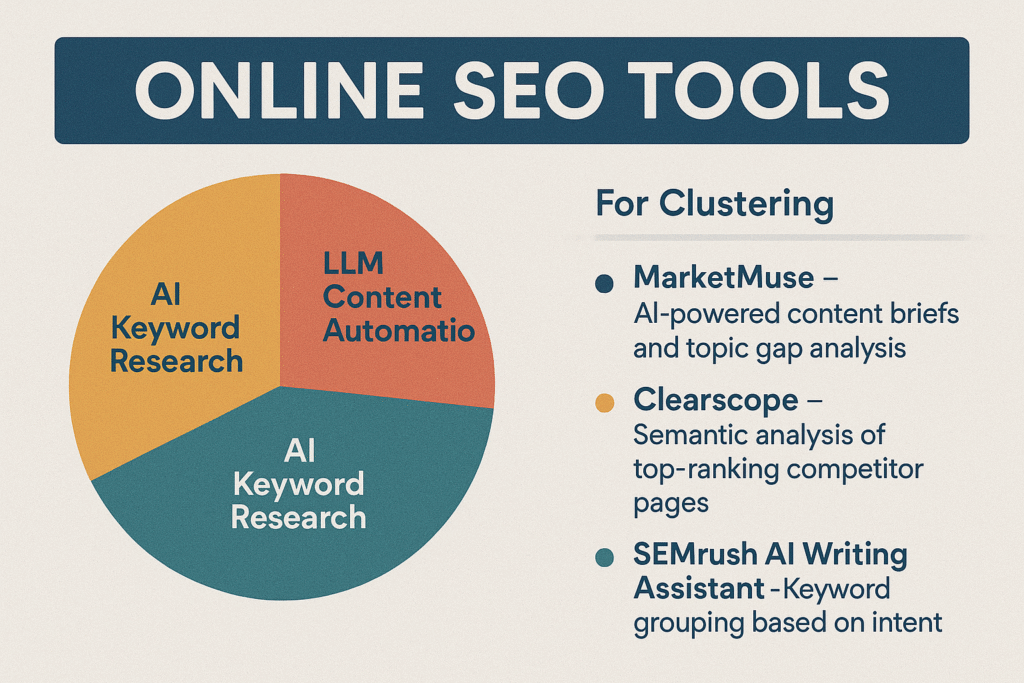
MarketMuse – AI-powered content briefs and topic gap analysis.
Clearscope – Semantic analysis of top-ranking competitor pages.
SEMrush AI Writing Assistant – Keyword grouping based on intent.
This method enhances relevance and improves ranking across multiple variations of a query.
AI-Powered On-Page SEO
LLMs can deeply analyze content for:
Readability scores (ensuring that even non-technical audiences can understand).
Engagement opportunities (suggesting where to add CTAs, visuals, or examples).
Keyword distribution and density (balancing natural usage vs over-optimization).
Tools like SurferSEO + ChatGPT let writers see real-time content scores while writing, ensuring optimization without sacrificing readability.
AI-Driven Link Building
Backlinks remain one of the most critical SEO ranking factors. LLMs can:
Scrape and identify potential authority websites in a niche.
Suggest high-value outreach targets with relevance scoring.
You can personalize outreach pitches based on the recipient’s past content or interests.
Example: Instead of blasting generic guest post emails, AI can generate context-aware messages like:
“Hi Sarah, I loved your recent article on local SEO trends. We’ve created a case study on AI-powered optimization that could add value to your readers—would you be open to collaborating?”
This personalization dramatically increases response and success rates.
Tools for AI SEO Optimization
Here are some of the most powerful tools currently integrating LLMs for SEO tasks:
SurferSEO + ChatGPT → On-page content optimization and AI rewriting suggestions.
Frase.io → Combines Answer Engine Optimization (AEO) with AI-driven clustering of questions and answers.
NeuronWriter → LLM-assisted topic modeling and keyword research.
Alli AI → Automates technical SEO fixes across entire sites.
MarketMuse automatically generates comprehensive analysis and semantic ratings.
Clearscope optimizes content based on conceptual relevance, depth, and topical authority.
By automating 70-80% of repetitive SEO chores, these solutions free up teams to focus on creativity, strategy, and E-E-A-T compliance.
Case Studies:
- Case 1:
How LLMs Boost SEO
E-commerce Brand Boost Conversions
A fashion store uses AI-generated product descriptions and semantic keyword targeting. Within 3 months, organic traffic increased 45%.
Product pages performed stronger for long-tail social queries.
Bounce rates reduced as the content became more engaging and customer-friendly.
- Case 2:
News Media CTR Surge
A newspaper utilizes artificial intelligence to A/B test headlines in real-time. LLMs provided titles that had powerful sentences, relevant language, and expressive variety. Result:
Bounce rates dropped when stories met higher reader expectations.
Bounce rates decrease as content fulfills higher reader expectations.
- Case 3:
Local Businesses Get Authority.
A dental business utilized AI-generated FAQs and schema markup to enhance its online presence. Within weeks, they started ranking for keyword searches including “best dentist near me for teeth whitening.” Patients experienced prompt responses, resulting in a 22% increase in appointment bookings.
Difficulties of AI Learning-Based SEO for LLMs
While powerful, AI SEO carries risks and limitations.
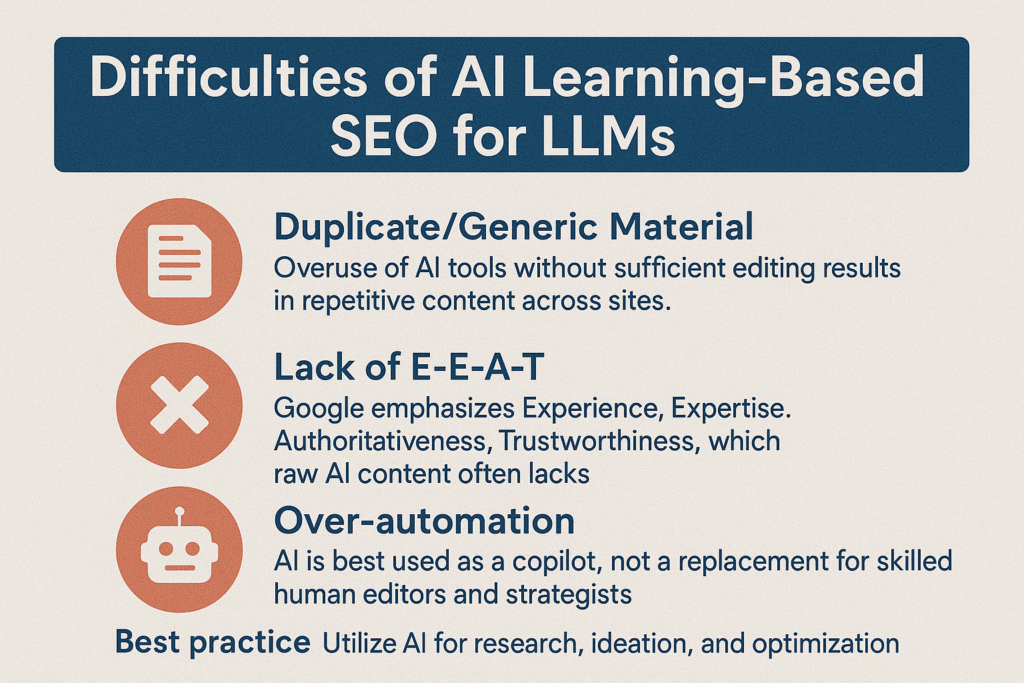
Duplicate/Generic material→ Overuse of AI tools without sufficient editing results in repetitive content across sites.
Lack of E-E-A-T → Google emphasizes Experience, Expertise, Authoritativeness, Trustworthiness, which raw AI content often lacks.
Over-automation → AI is best used as a copilot, not a replacement for skilled human editors and strategists.
Best practice→ Utilize AI for research, ideation, and optimization, while ensuring human oversight for originality, credibility, and compliance with SEO standards.
The Future Of LLM-Driven SEO
SEO is evolving toward a hybrid approach, where AI and humans collaborate to generate content and optimize methods.
- Personalized AI Search
Search engines will present users a range of responses based on their personal data, past browsing habits, and preferences. Businesses need to optimize for specific target segments rather than using generic searches.
- Multimodal AI Search
The future of search will consist of voice, images, and text. Example: “Show me vegan meals made using these ingredients.” [image].” Search engines will use LLMs to parse both pictures and text queries simultaneously.
- Integration with AEO & GEO
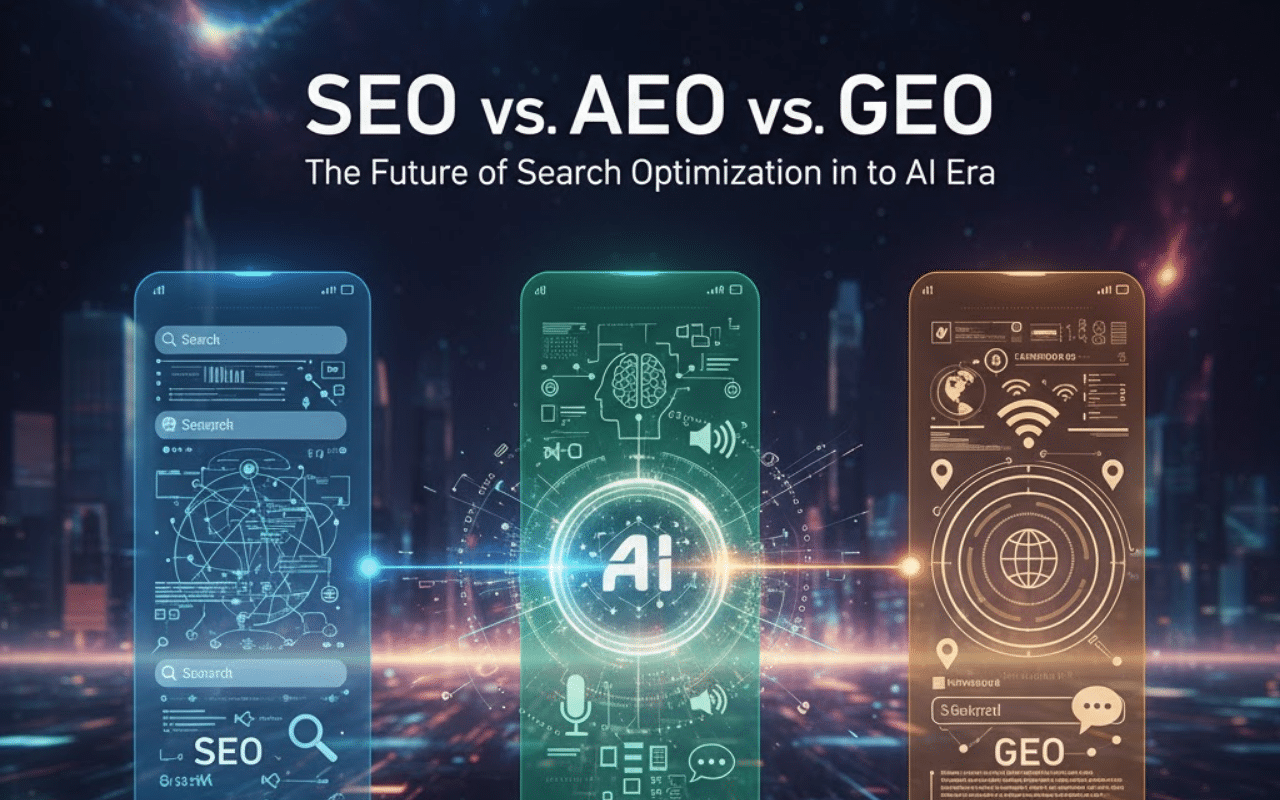
LLMs will merge with Answer Engine Optimization (optimizing for AI chatbots like Bing Copilot and Perplexity) and Generative Engine Optimization (Google’s AI Overviews). Ranking strategies will expand from Google SEO alone to multi-platform AI visibility.
By 2030, analysts predict up to 50% of online transactions could originate from AI-assisted or voice-initiated queries, making LLM SEO an unavoidable priority.
In conclusion
AI SEO with LLMs promises a significant change in digital marketing, especially when compared to how things have evolved since the inception of Google. Therefore, businesses that adapt to use AI-powered tools, search engine optimization, and automated workflows will not only survive but also grow in the next wave of SEO.
AI Learning-Based SEO has expanded beyond keywords and backlinks to include conversations, context, adaptability, and AI-powered customization. Final takeaway: Think of LLMs as SEO copilots. Ultimately, they won’t replace marketers; instead, they’ll empower them to scale faster, optimize smarter, and outpace competitors in an AI-first world. There is a lot more information and ideas you’ll find by visiting our website Rankiify.
FAQs: AI SEO and LLMs
- What is AI SEO optimization?
- How do LLMs help in ranking higher?
- Best AI Learning-Based SEO tools in 2025?
- How to do AI keyword clustering?
- Is AI-generated content good for SEO?
- How to avoid duplicate content with AI?
- Future trends in AI search optimization?







Post Comment